
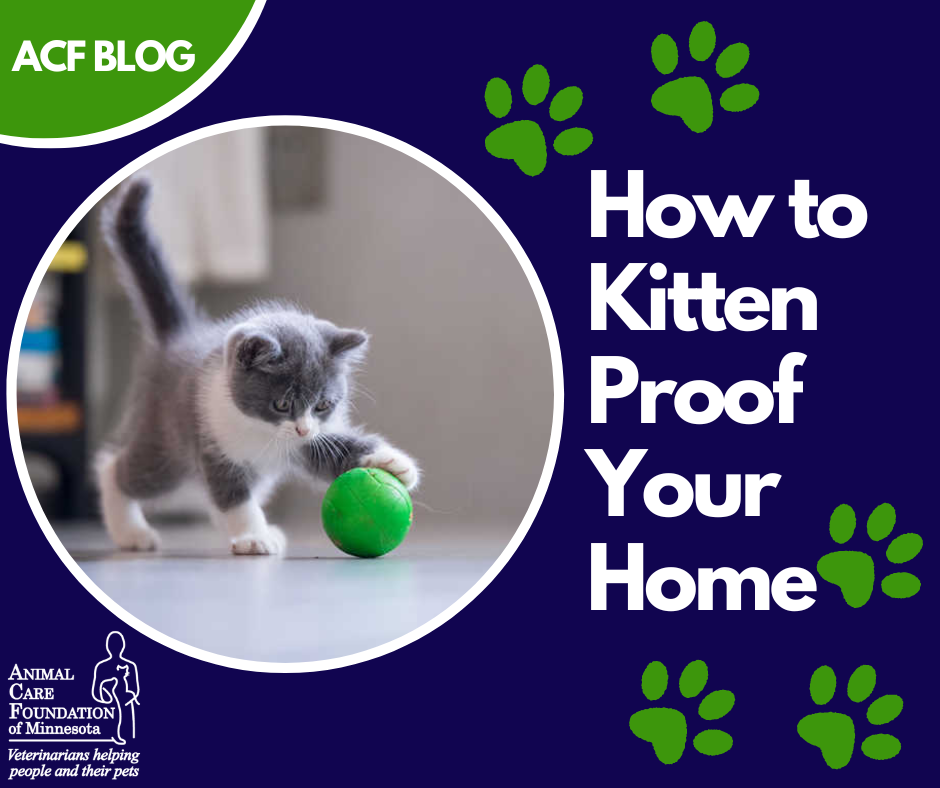
 Introduction Bringing a new kitten into your home is an exciting and joyful experience. These tiny furballs bring warmth and companionship into our lives, but they also come with a mischievous streak that can lead them into trouble. To ensure your new family member is safe and happy, it's essential to kitten-proof your home. In this blog, we'll guide you through the process of making your home a safe and welcoming environment for your curious kitten. When you first bring your kitten home, consider gradually introducing them to your space by allowing them access to your space over time. If they are a bit fearful, use a room that is less traveled so they can get used to the sounds and smells of your home. Go in to visit often, even if it is just to sit in the room while they hide. Once your kitten is done hiding, you can allow them into a room that you spend a great deal of time in, this will help them bond with you as they will learn that you are a safe human. Once they have learned to trust you, you can let them into the rest of your home, though you might want to start with supervised exploration if they are extremely curious or you haven’t finished the kitten proofing listed below. 1. Remove Hazardous Items Kittens are natural explorers and may chew on or swallow things they shouldn't. Begin by identifying and removing any potential hazards, especially those they may swallow or that are toxic. Small objects, like rubber bands, hair ties, and string should be removed to prevent your kitten from ingesting them, potentially leading to dangerous blockages. Toxic plants are another concern. Kittens will often chew on plants and eat the pieces they bite off. Some common houseplants are incredibly toxic to our fur friends and should be removed. Others will cause our pet discomfort or pain, and unlike humans, most won’t figure out that the plant they ate is what led to the tummy ache. Learn more about the most common and dangerous plants in our toxic plant blog here. Chemicals are another concern, kittens and cats will lick many things, even if we don’t think they would taste good, so take a moment and ensure that no chemicals are available for them to eat (the most common issues are with bug or rodent killers and cleaners). 2. Cord Management Kittens love to play with strings and cords, but they can pose serious dangers. Ensure electrical cords are out of reach or encased in protective covers. This prevents your kitten from chewing or accidentally pulling on them, avoiding electrical shocks and hazards as well as damage to your electronics. 3. Secure Cabinets and Drawers Kittens are known for their knack for finding hidden treasures in cabinets and drawers. Be prepared to invest in childproof locks to keep curious paws out of places they shouldn't be if you end up with a kitten who opens cabinets. This also helps avoid accidents or getting them stuck. While these are not necessary for all cats, there are a few who will need the additional deterrence. 4. Cover Trash Bins Kittens are experts in rummaging through trash. To avoid messes and potential ingestion of harmful substances, keep your trash cans securely covered or behind a closed door. 5. Anchor Heavy Furniture Kittens love to climb and jump on furniture. To prevent accidents, anchor heavy items like bookshelves and TVs to the wall. This also keeps your kitten from knocking over expensive electronics. Most furniture comes with wall anchors for toddler protection, these devices work for kitten proofing as well. 6. Provide Safe Toys and Scratching Posts Kittens need mental and physical stimulation. Offer a variety of safe toys, scratching posts, and interactive playtime to keep your furry friend entertained and prevent them from seeking entertainment in potentially hazardous ways. Consider rotating toys every couple weeks, this will help your cat remain mentally stimulated with the removal and reintroduction of different toys. 4. Cover Trash Bins Kittens are experts in rummaging through trash. To avoid messes and potential ingestion of harmful substances, keep your trash cans securely covered or behind a closed door. 5. Anchor Heavy Furniture Kittens love to climb and jump on furniture. To prevent accidents, anchor heavy items like bookshelves and TVs to the wall. This also keeps your kitten from knocking over expensive electronics. Most furniture comes with wall anchors for toddler protection, these devices work for kitten proofing as well. 6. Provide Safe Toys and Scratching Posts Kittens need mental and physical stimulation. Offer a variety of safe toys, scratching posts, and interactive playtime to keep your furry friend entertained and prevent them from seeking entertainment in potentially hazardous ways. Consider rotating toys every couple weeks, this will help your cat remain mentally stimulated with the removal and reintroduction of different toys. Written by: Ashley Neutgens
Edited by: Heather Mains
0 Comments
 Introduction Separation anxiety is a common issue among dogs, and it can be distressing for both pets and their owners. Dogs with separation anxiety often display destructive behavior, excessive barking, and other signs of distress when left alone. Luckily, many effective solutions can help support dogs coping with separation anxiety. In this blog, we'll explore four solutions that can make a significant difference in your dog's life.
1. Gradual Desensitization Gradual desensitization is a widely recognized and effective technique for reducing separation anxiety in dogs. The idea is to slowly acclimate your dog to being alone by progressively increasing the duration of time they spend by themselves. Here's a step-by-step approach: - Start with short periods of separation, just a few minutes, and gradually extend the time. - Create a predictable routine for your dog to help them understand when you will leave and return. - Reward your dog with treats, toys, or positive reinforcement when they exhibit calm behavior during your absences. - Over time, your dog will learn that your departures are not permanent and that you will always return. 2. Comfort Items and Crate Training Providing your dog with comfort items, such as their favorite toys or a cozy blanket, can help ease their anxiety. Crate training can also be beneficial for dogs with separation anxiety. Here's how you can use these tools effectively: - Introduce your dog to their crate gradually, making it a positive and safe space. - Place their favorite toys, treats, and bedding in the crate to make it inviting. - Use the crate when you leave the house, ensuring it's a secure and comfortable environment. - Over time, your dog will associate the crate with safety and security, helping to reduce anxiety. 3. Medication and Professional Guidance In some cases, behavioral training alone may not be enough to manage severe separation anxiety. Consult with a veterinarian or a certified dog behaviorist to discuss the possibility of medication. Medications like anti-anxiety drugs can be prescribed to help alleviate your dog's anxiety. These should be used in conjunction with behavioral training and under the supervision of a professional. 4. Hiring a Pet Sitter or Dog Walker Sometimes, dogs with separation anxiety benefit from the companionship of a pet sitter or a dog walker. Having someone drop in during the day to spend time with your dog, take them for a walk, or provide playtime can break up the periods of solitude and ease their anxiety. This solution is especially effective for dogs that require more social interaction. Conclusion
Dealing with a dog suffering from separation anxiety can be challenging, but with patience, consistency, and the right solutions, it is possible to help your pet feel more secure and relaxed when you're not around. Each dog is unique, so it may take some trial and error to find the right combination of strategies that work best for your four-legged friend. Remember that overcoming separation anxiety is a process, and the key is to provide love, support, and understanding to help your dog build confidence and feel at ease when left alone. Written By: Ashley Neutgens 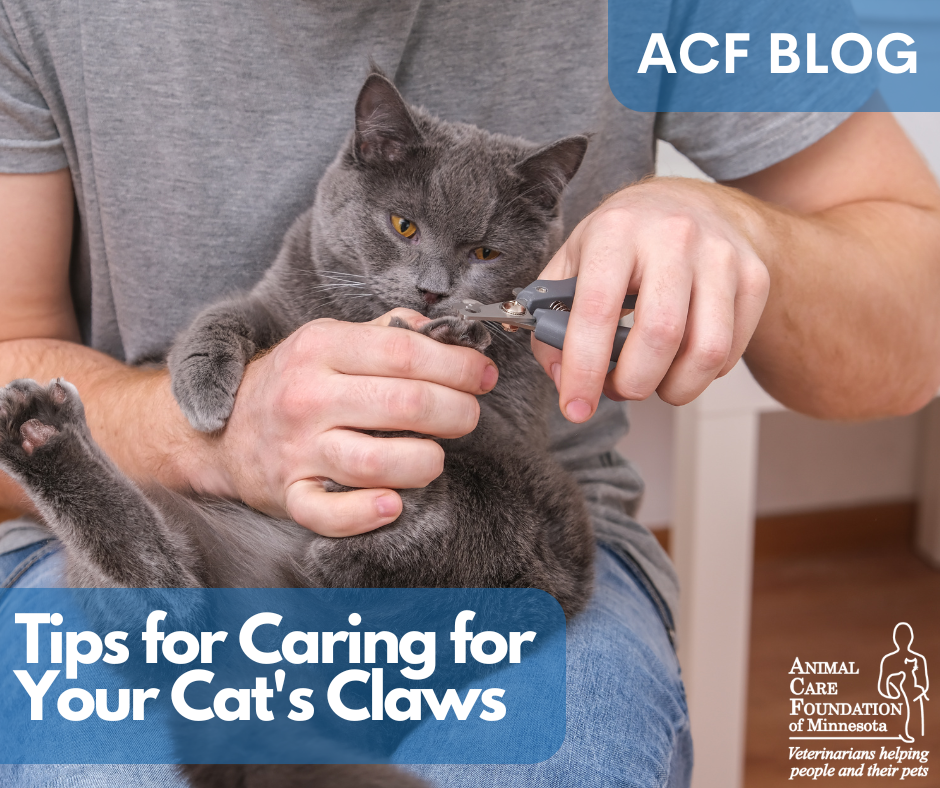 Cats are known for their sharp claws, which serve a variety of purposes, from hunting to climbing and scratching. While these claws are essential for your feline friend's well-being, they can sometimes pose challenges when it comes to maintaining your furniture and ensuring your cat's claws remain healthy. In this blog, we'll explore some essential tips for caring for your cat's claws to keep both your pet and your home in the best possible condition.
1. Provide a Proper Scratching Post Cats have an innate need to scratch to keep their claws healthy and sharp. To prevent your feline friend from using your furniture as a scratching post, provide them with a suitable alternative. Look for a sturdy scratching post made of materials like sisal or cardboard. Position it in an accessible and appealing location in your home. You can even sprinkle some catnip on it to make it more enticing. If you are having trouble with your cat scratching the corners of your couch consider buying cat scratching arm wraps made of durable sisal or other fabric that can stand up to their claws. If that is not possible you might be able to place furniture in such a way as to discourage scratching in that location while trying to encourage them to use the alternative scratching surfaces you have provided. 2. Regular Nail Trimming To maintain your cat's claws at a reasonable length, you may need to trim them regularly. Most cats do not enjoy having their claws trimmed, so it's essential to start this practice when your cat is young and gradually get them accustomed to it. Use cat-specific nail clippers and be cautious not to cut too close to the quick, as this can be painful and cause bleeding. If you're unsure about trimming your cat's claws, consult your veterinarian or a professional groomer. 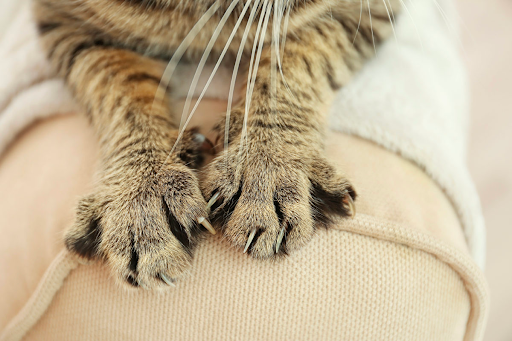 3. Offer Cat Toys and Playtime Interactive play is not only a great way to bond with your cat but also to help keep their claws in good condition. Toys that encourage pouncing, swatting, and grabbing can help naturally wear down their claws. Engaging your cat in playtime can also prevent boredom and reduce the likelihood of destructive scratching. 4. Check for Overgrown Claws Regularly inspect your cat's claws to ensure they are not becoming overgrown. Overgrown claws can curl into the paw pads, causing pain and discomfort. If you notice any overgrown claws, consult your veterinarian for guidance on how to address the issue safely. 5. Cat Claw Caps For cats that are particularly prone to scratching furniture or people, claw caps can be a temporary solution. These soft plastic caps are glued onto your cat's claws and can help prevent damage. While they don't replace the need for regular claw maintenance, they can be a helpful tool in preventing damage while you work on redirecting your cat's scratching behavior. 6. Diet and Nutrition A well-balanced diet can also contribute to your cat's claw health. Ensure that your cat's food contains adequate nutrients, including protein, vitamins, and minerals. Proper nutrition helps support overall paw and claw health. 7. Monitor for Signs of Claw Problems Keep an eye on your cat's claws for any signs of problems, such as splitting, excessive shedding, or signs of infection. If you notice any issues, contact your veterinarian for a thorough examination and appropriate treatment. Caring for your cat's claws is an essential aspect of pet ownership that not only benefits your feline friend but also helps maintain a harmonious home environment. By providing your cat with the right tools and guidance, you can ensure their claws remain healthy, and you can enjoy a scratch-free and happy coexistence. Remember to be patient and gentle when implementing these tips, as your cat's comfort and trust are of utmost importance.  Written by: Ashley Neutgens
 Introduction Dogs are incredibly social animals, and they often form deep bonds with their human companions. While we all wish we could spend every moment with our furry friends, the reality is that sometimes we have to leave them home alone. Leaving your dog alone for extended periods can lead to boredom and anxiety, but with the right strategies, you can keep your pup entertained and content while you're away. In this blog, we'll explore various ways to ensure your dog remains happy and stimulated when you can't be there with them. If you are having troubles with your dog experiencing separation anxiety, you can also check out the blogs listed below for more ideas: If the advice in these blogs does not help or you have already tried it, find a veterinarian that specializes in behavior. You can check out the Board of Veterinary Behaviorists website for more information and to help you find a licensed specialist in your area! 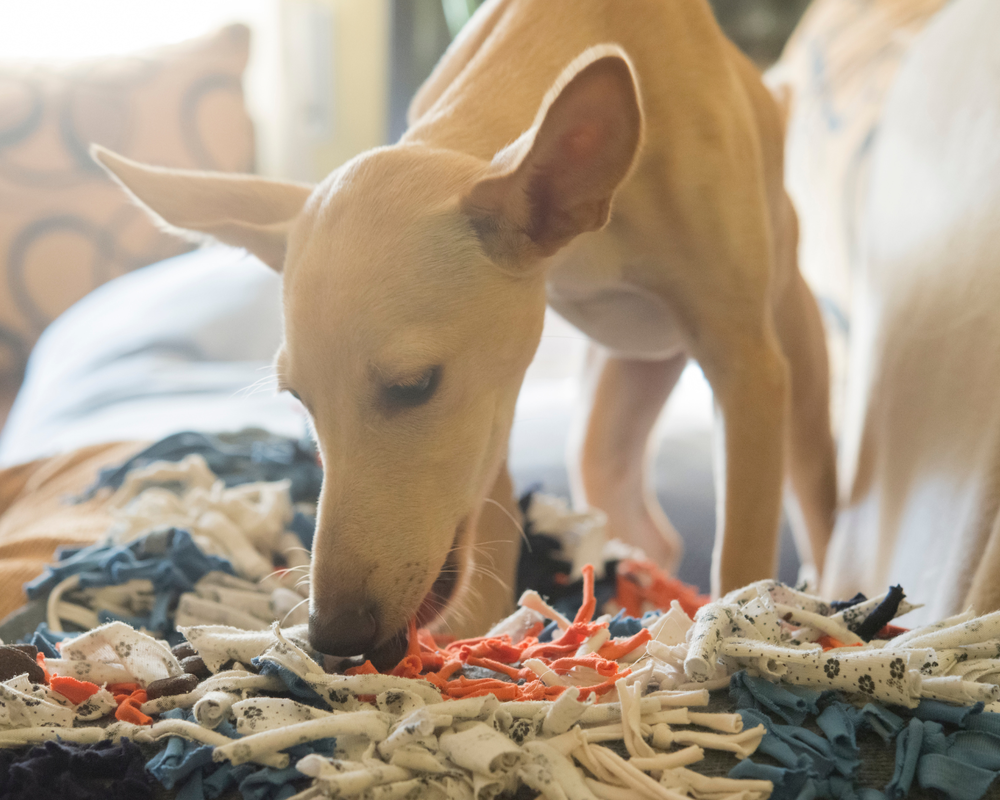 1. Puzzle Toys One of the most effective ways to engage your dog's mind and keep them entertained is through puzzle toys. These toys are designed to challenge your dog's problem-solving skills and provide mental stimulation. Fill a Kong toy with treats or peanut butter and freeze it to make the challenge last longer. As your dog works to get the goodies out, it can keep them occupied for hours. When choosing toys that you’ll leave alone, make sure there are no pieces they can chew off and swallow. 2. Interactive Feeders Interactive feeders are another great option to occupy your dog's time and provide mental stimulation. These devices dispense small amounts of kibble or treats as your dog interacts with them. Not only does this keep your dog mentally engaged, but it can also slow down fast eaters and prevent overeating. Again, make sure there are no pieces that your pet could chew off and swallow. 3. Safe Chew Toys Chew toys are not only excellent for maintaining your dog's dental health but also for keeping them busy. Depending on your dog's chewing habits they may be safe to leave as an option when you are not home. However, if your dog is an aggressive chewer or breaks pieces off, use extreme caution giving them to your pet even when you are there to supervise. Large chunks can be a choking hazard or cause an intestinal blockage! If there is any doubt it is better to err on the cautious side, as swallowing too large a chunk can cost your dog their life. Greenie chews tend to be safe, but even with these, some dogs will swallow them whole, so use caution. 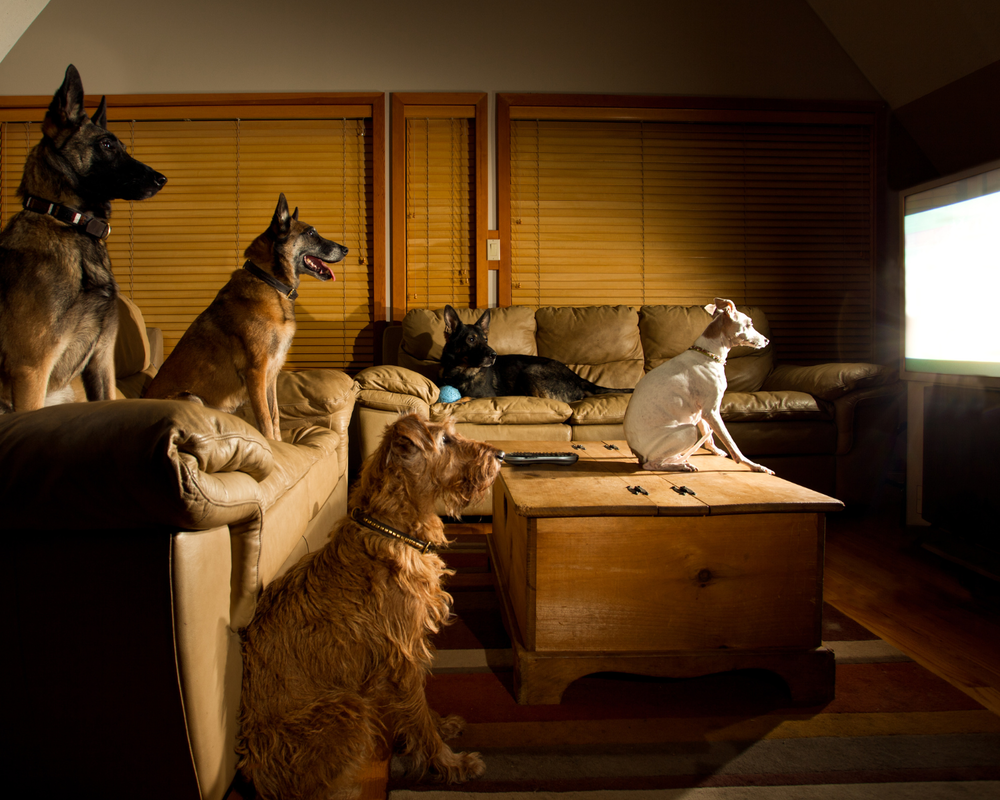 4. Dog TV and Music Believe it or not, there's now dog-specific programming available on TV and soothing music designed to relax and entertain your canine friend. Leaving the TV on or playing calming music can help alleviate separation anxiety and keep your dog entertained. If you do opt for a dog specific station, ensure that the programming will not tempt your pup into lunging at the tv potentially knocking it over and causing injury. Cat TV is particularly known for tempting cats into hunting behavior with dramatic results for the tv (on the floor) and sometimes the pet (getting hit by the falling tv and being injured). 5. Rotate Toys Dogs can get bored with the same toys if they see them every day. Rotate your dog's toys, so they have "new" ones to explore periodically. This can make their playtime more exciting and engaging. Utilizing different puzzles and interactive feeding techniques can dramatically increase your dog’s mental stimulation and provide a great deal of enrichment! 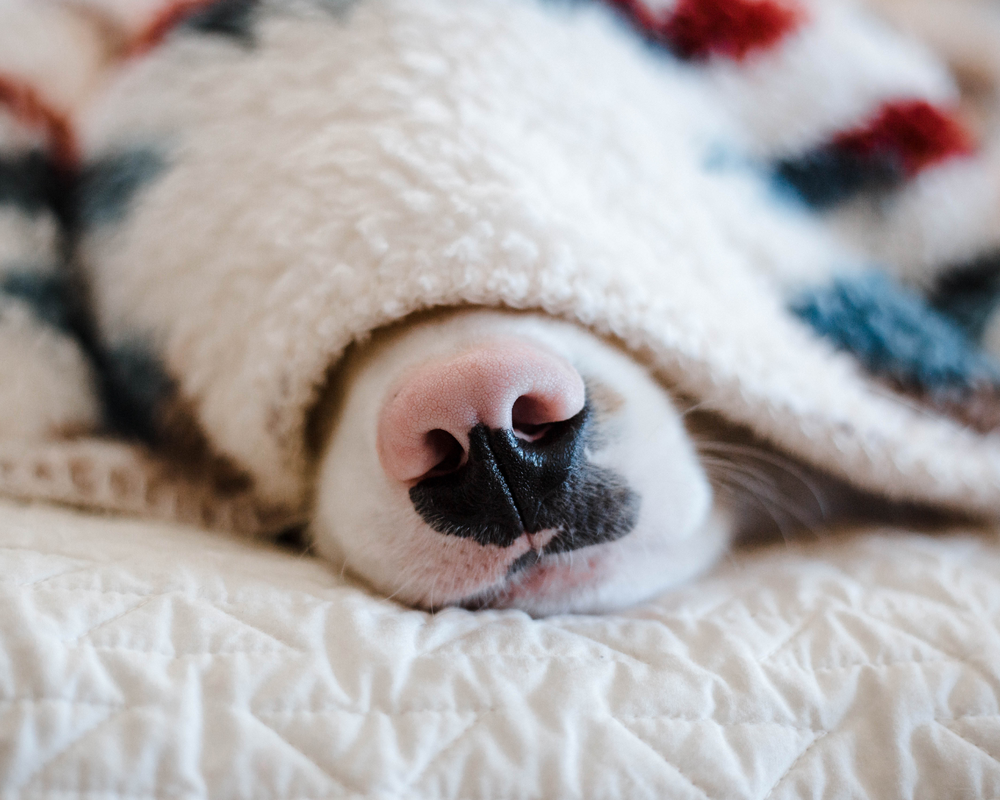 6. Provide a Comfortable Bed If you confine your dog to a smaller area of the house when you leave, make sure to provide them with a comfortable place to nap. Odds are even with providing many enrichment options your pup is going to spend a good part of your time away napping! Make sure they have a comfortable place to do so, and try not to be too annoyed when they choose the tile floor over the comfy bed on a hot day! 7. Find a Neighbor to Stop In With more people working from home than ever before, you may be able to find a neighbor who will stop in mid-day to visit your pet and maybe even go for a walk with them! For folks living in apartments that don’t allow pets or who are trying to increase their activities levels this may be a win-win for you both! Be sure to do your due diligence before opening your home to such a set up and make sure they are trustworthy!  8. Plan Time Together on Your Return
Even with all this planning your dog is going to want your attention when you return home, which can sometimes be an annoyance, especially after a rough day. Plan a regular activity to do with your dog when you return home that can provide both of you some relaxation. Plan a walk, some fetch, or some snuggles (especially as your dog ages). Remember, for most of our dogs we are their only pack, they need connection from you even when you have had a long day, so try to find an activity you can both enjoy together (if you live in MN and hate the cold, come up with an indoor option for both your sakes!). Conclusion Leaving your dog home alone doesn't have to be a source of guilt or worry. By providing your furry companion with engaging activities and mental stimulation, you can ensure they remain happy and content during your absence. Whether it's through puzzle toys, interactive feeders, social interactions, or television, there are plenty of ways to keep your dog entertained and emotionally fulfilled during the hours you’re away. The time you spend connecting with them before leaving for the day and on your return, can also have a huge impact on how they handle the time when you are not there. Remember that a happy, stimulated dog is a well-behaved and emotionally healthy one. Below you will find a guide for hosting a fundraiser for the Animal Care Foundation! If you have any questions you can email us at [email protected] and we will do our best to help you. Hosting a fundraiser is a great way to scale your impact and we are so thankful for your participation! Below you will find all of the information you’ll need to set everything up, customize the most important parts, and sample language! We have done much of the heavy lifting for you because we know how busy you are! Your time investment can be just 10-15 minutes! Section 1: How to set-up your fundraising page and join the team. Section 2: Tips to make your fundraiser more successful. Section 3: Sample emails to adapt and conversation starters. Section 1: Set-up your fundraising page and join the team! Step 1: Go to the Animal Care Foundation’s Give MN page https://www.givemn.org/team/Acfmax2023 (click stay on this page anytime a pop-up shows up) and then click Join This Team. 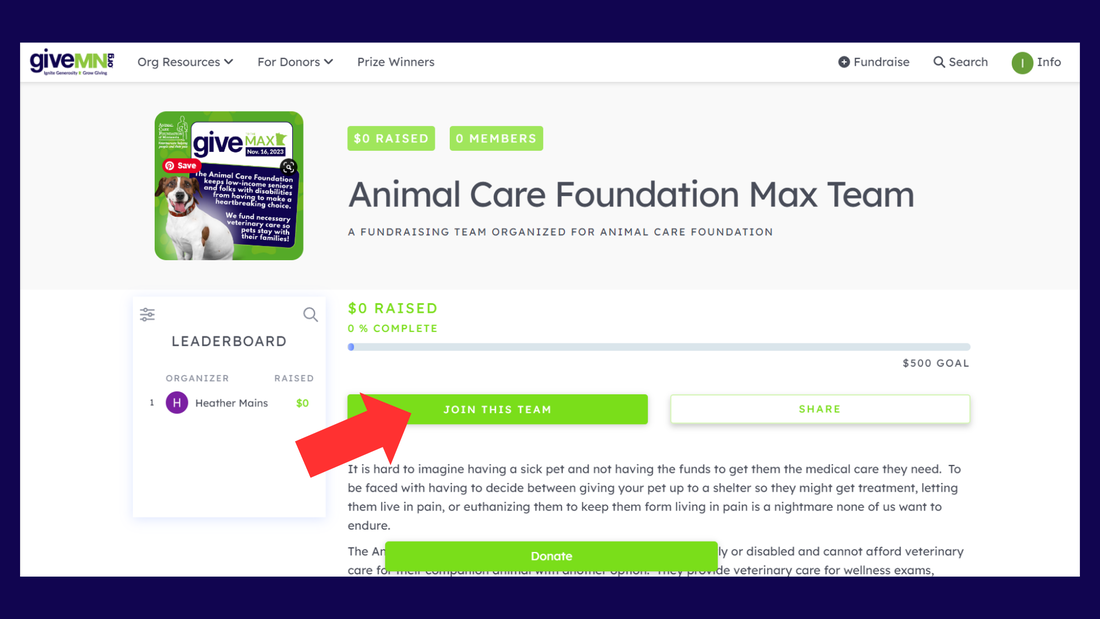 Step 2: Click “Get Started” in the pop-up window.  Step 3: Click “Build Your Fundraiser” in the next pop-up window.  Step 4: You are now on your fundraising page! Using the template, you can adapt it as much or as little as you want! Any field that has a pencil next to it can be edited. At a minimum, we recommend following the next two steps. 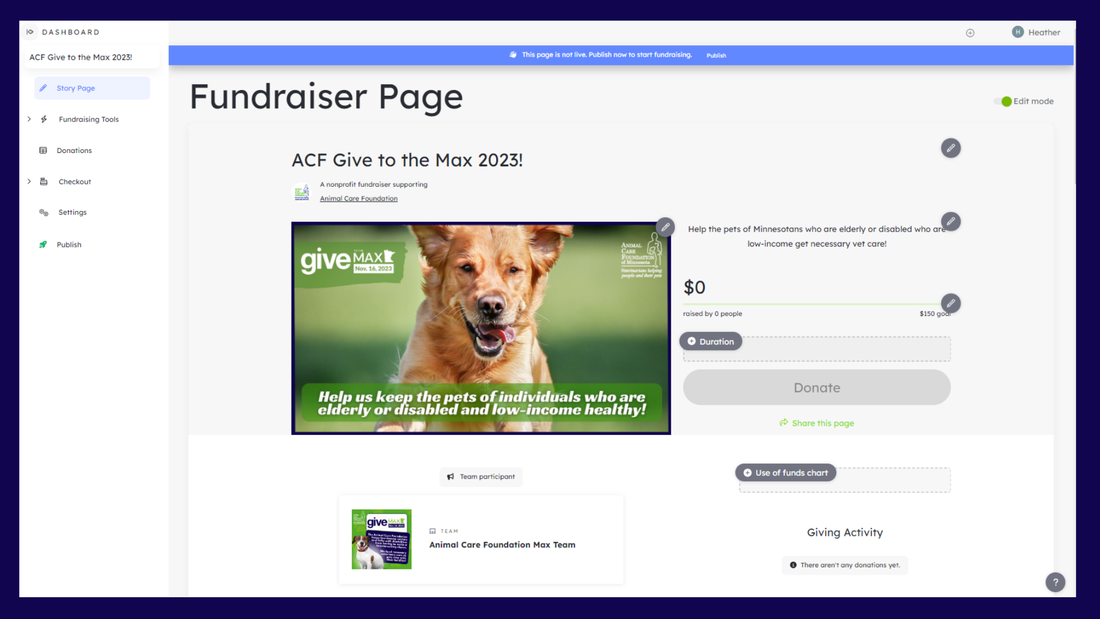 Step 5: Edit your goal fundraising amount by clicking on the pencil and entering the total amount you want to raise. 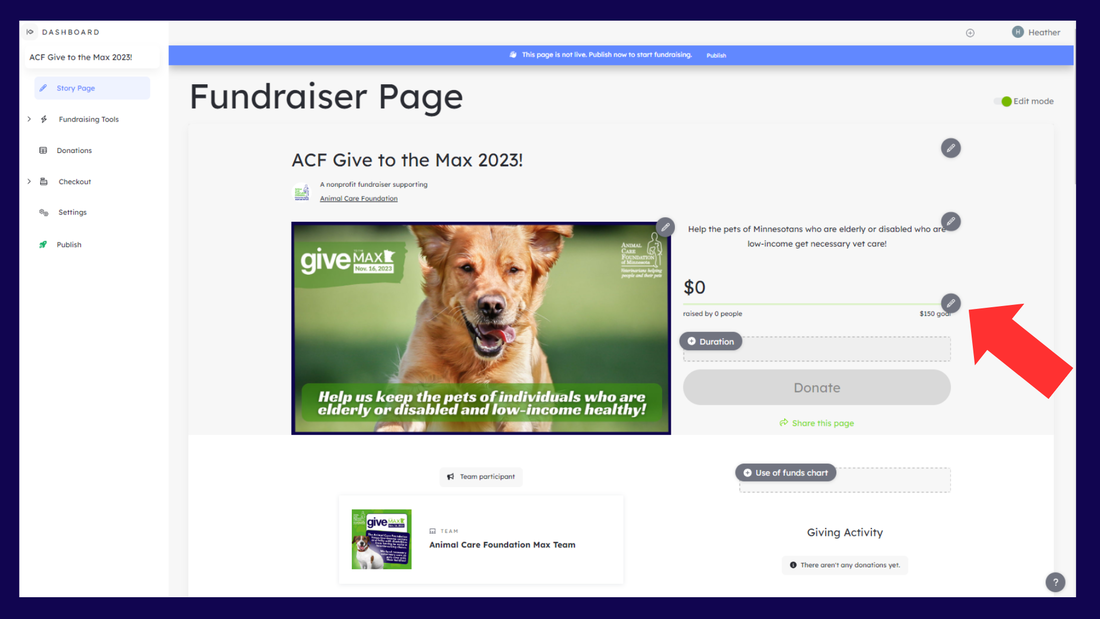 Step 6: Click on Settings and then customize the URL to something that works for you. I made my own, ACFHeather. Make sure to click the green “SAVE” button once you have customized it. 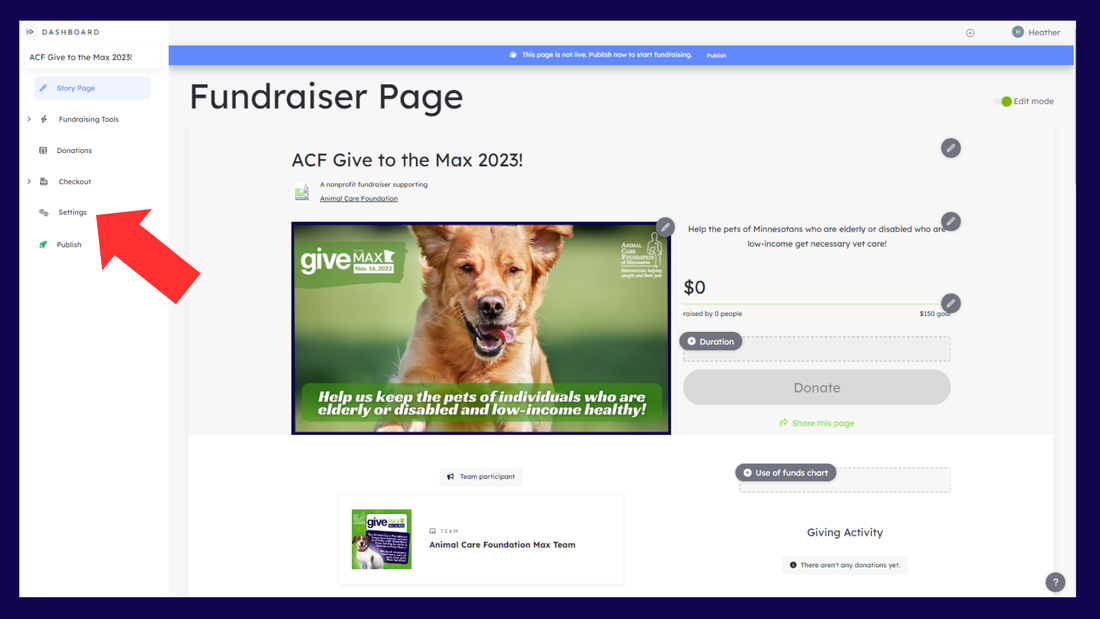  Step 7: (Optional) Click on the Story Page in the dashboard and then scroll down to the “Story’ section. Update the story section by sharing a personal story about the meaning of your pet to you or the impact you saw a pet have on a loved one when they were struggling. A personal connection is a great way to motivate your friend and family to participate. Once you are done editing, make sure to click SAVE (circled in red in the photo). 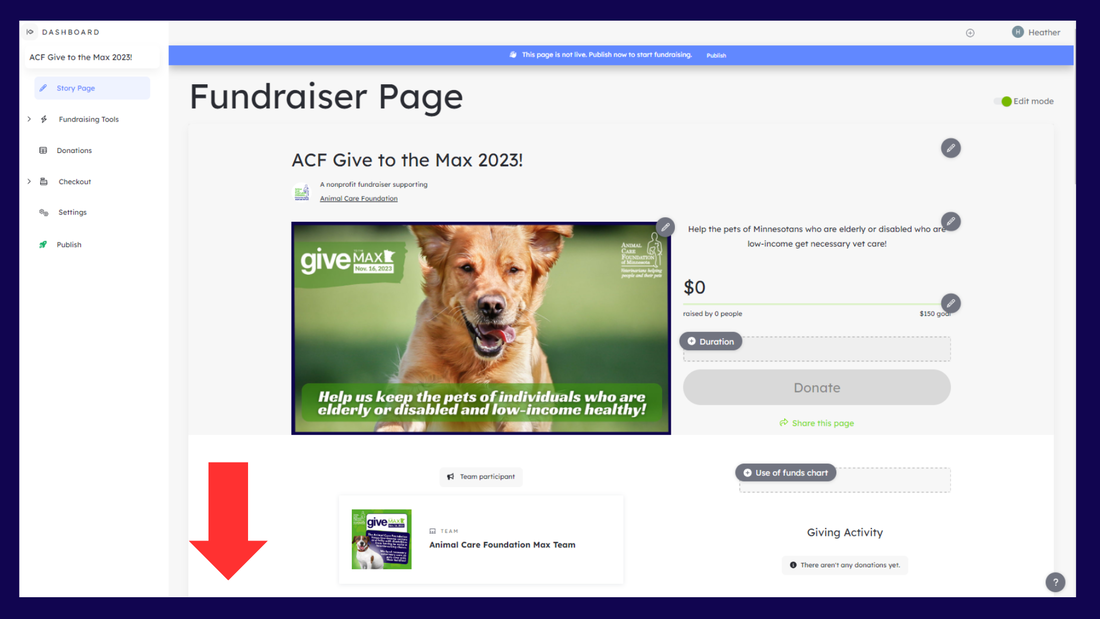 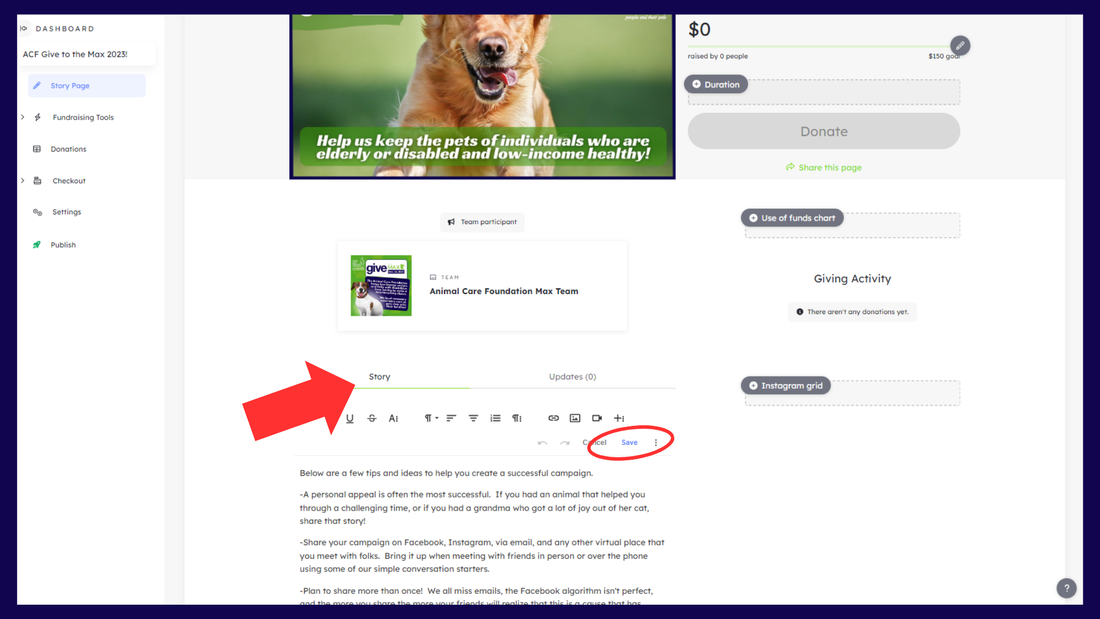 Step 8: Click on the publish button and follow the prompts in the dialogue box that opens. Your personalized fundraising page is now live! Check it out by entering the website you customized in step 6 above. 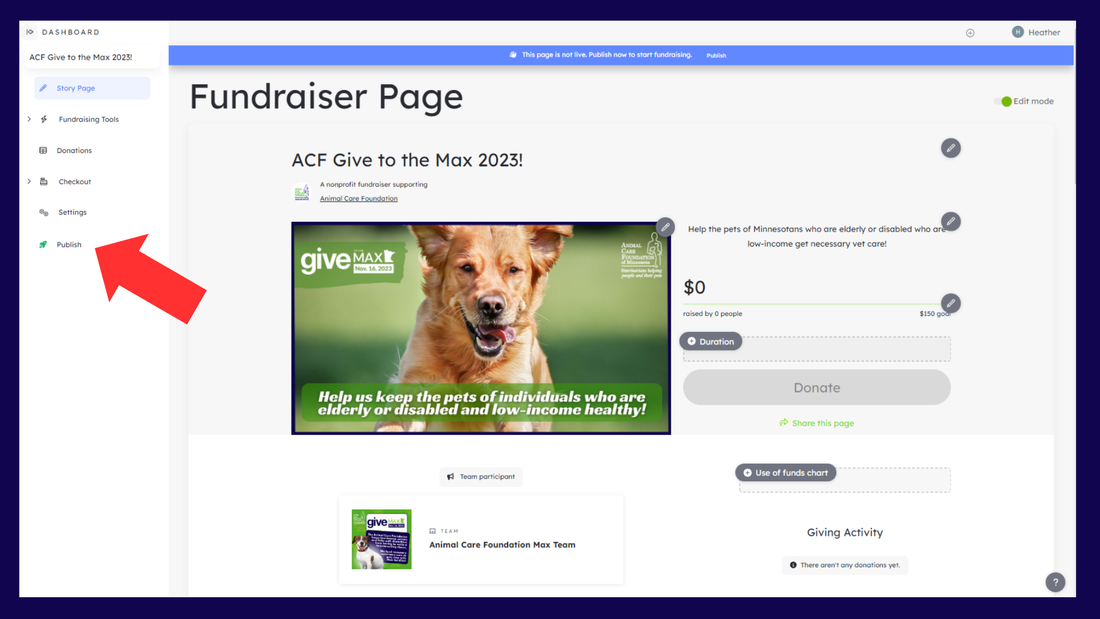 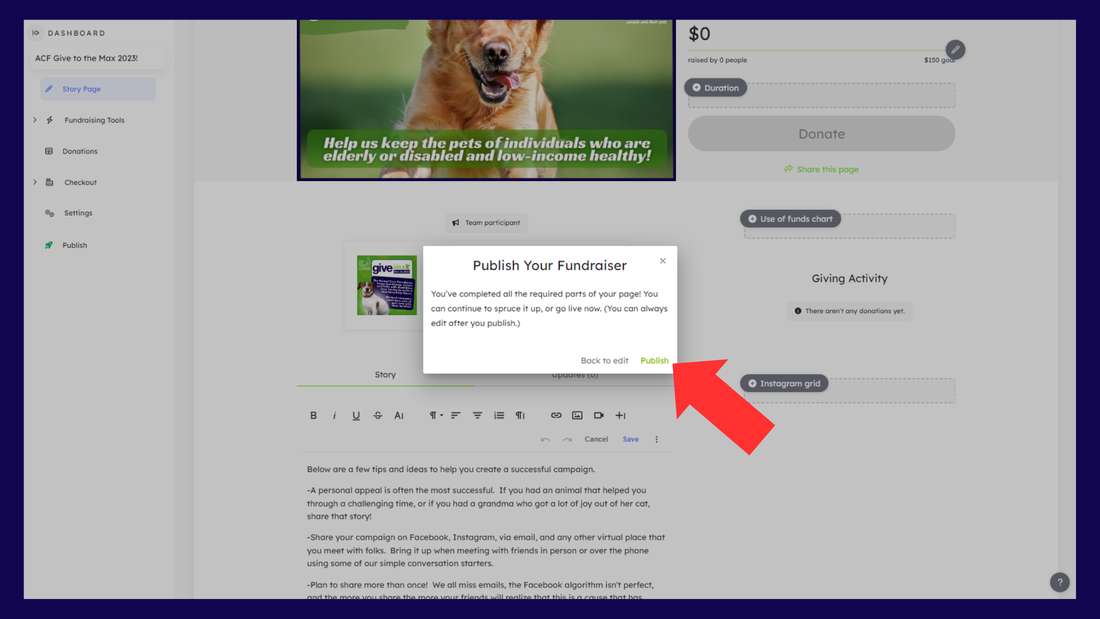 Step 9: Click on “Share Now” to share to your social media! Follow the prompts (you’ll probably need to login to your social accounts for this step). Alternatively, you can share the unique website you made in step 6 directly on your social media pages with your own personal photo of choice.  Step 10: Reshare a few days later. The algorithms are not always in our favor, people are busy, and we all get distracted. Give your community more than one opportunity to engage with you! Step 11: (Optional) Utilize the Bingo Sheet below and capitalize on the $10 bonus donations from our matching fund for each bingo you get! Step 11: (Optional) Send it out via email and talk to your friends and family when you see them in person! We have included some email templates that you can customize as well as some conversation starters you can use when talking to folks in-person. We know not everyone knows how to bring these kinds of things up and we do not want you to do a hard sell. Instead, think of it as sharing about something that you think is cool or interesting. If folks want to give, they will. If they don’t they are not going to think harshly about you for sharing something you are passionate about with them! Section 2: Tips to make your fundraiser more successful.
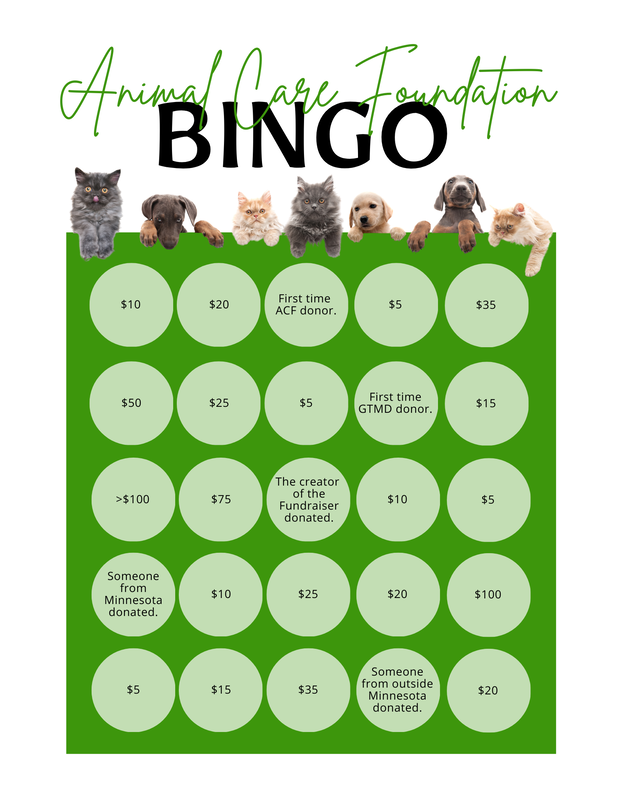 
Section 3: Sample emails and conversation starters. Sample Email 1:
Subject: Cool Organization! Please support:) Dear Friend, I'm writing today to tell you about a non-profit that is doing some wonderful work, the Animal Care Foundation. I can't imagine having a sick pet and not having the funds to get them the medical care they need. You know how important _____ is to me! To be faced with having to decide between giving my ____ up to a shelter so they might get treatment, letting them live in pain, or euthanizing them to keep them from living in pain is like a nightmare I hope I never need to endure. The Animal Care Foundation provides Minnesotans who are elderly or disabled and cannot afford veterinary care for their companion animal with another option. They provide veterinary care for wellness exams, preventative treatments, illness care, chronic disease treatment, surgeries, and other necessary veterinary care. Because of them, these folks can keep their pets and the pets can have a good quality of life with their families! I'm running a fundraiser to help support the work they are doing! If you could make a donation it would mean so much to me! Every bit helps! You can do so at __(website)__. Regards, Sample Email 2: Subject: Opportunity to Support the Animal Care Foundation Dear Colleague, I hope this email finds you well. As we approach Give to The Max Day on November 16th, I would like to extend an invitation to you to consider participating by making a donation to the Animal Care Foundation. This Foundation is an amazing animal welfare organization that helps the pets of Minnesotans who are disabled or elderly get necessary veterinary care for their pet that they couldn’t otherwise afford! The work done by this organization helps these animals remain healthy and with the families that love them! You know the meaning, joy, and motivation that a pet can bring into your life. The folks that ACF helps, love their pets so much and are faced with some very challenging choices since they do not have the funds to get their pet the care they need without pulling funds from a necessary expense like rent or food. Your support would be greatly appreciated in helping further the Animal Care Foundation mission of providing vital care and support to animals in need. If you are willing to contribute you can do so at __(your website fundraiser here)___. If you have any questions, please feel free to reach out to me directly. Together, we can make a substantial difference in the lives of these animals and their humans. Warm regards, Conversation Starter #1 Friend: What have you been up to lately? You: Well, I've actually been working on a fundraising campaign for this really cool nonprofit! They help people who are elderly or disabled take care of their pets by connecting them with veterinary care they otherwise would not be able to afford. Friend: (they will either ask a follow up question or change the topic. You can go with either, this is Minnesota and we do not expect you to do the hard sell!). Conversation Starter #2 You: Hi, friend. I've been working on this fundraising thing for this nonprofit that helps animals get veterinary care they otherwise wouldn't be able to get. Do you think you can give me your opinion on what I've written/my plan. (share the website, after they give feedback you can say if you want to donate you can do so here ___ ) Honoring the Heart and Hands |
|||||||||||||||||||||||||||||||||||||||||||||||||





 |
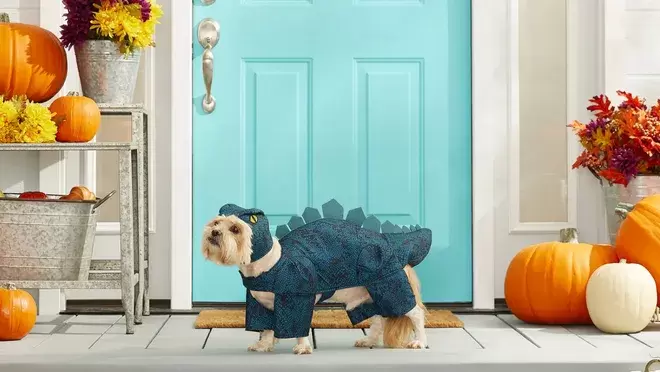
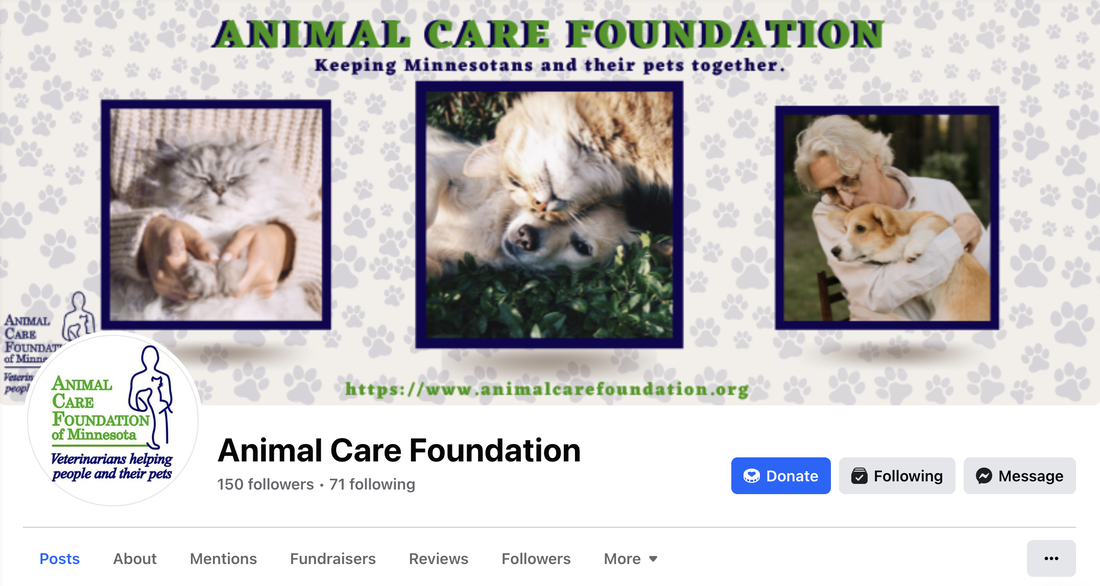
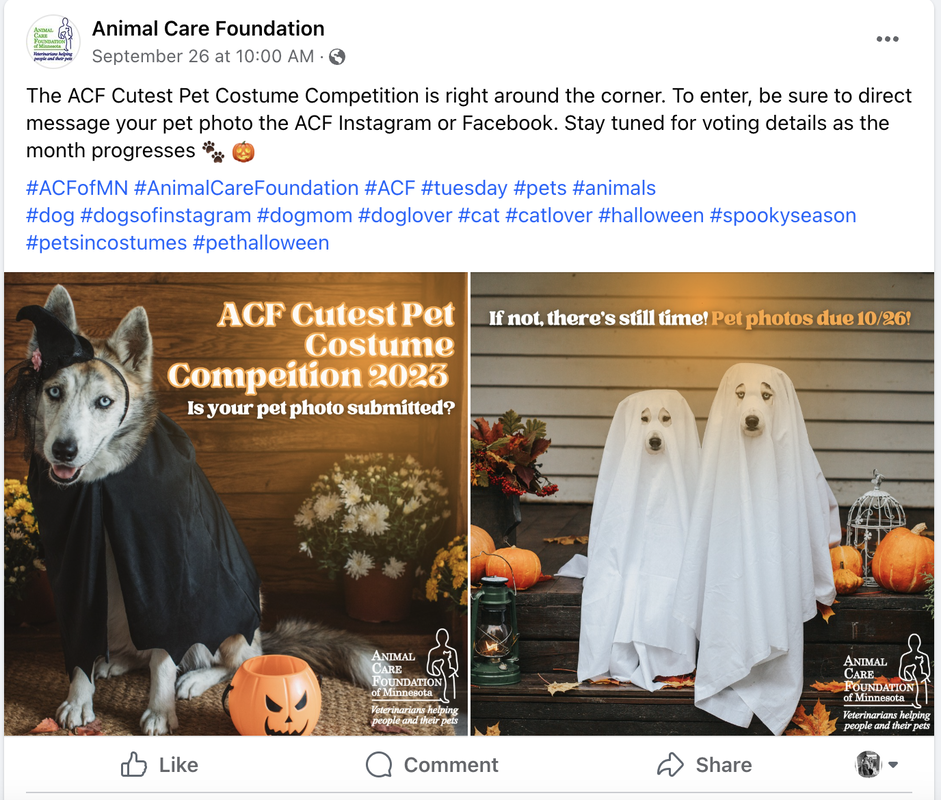
Animal Care Foundations annual costume contest! Arguably one of the best times of the year, share your adorable pets, whether it's a dog, cat, rat, horse, snake, worm, we want to see it! Not to mention that if you enter, you get the chance to win a $50 amazon gift card! Keep reading to see details on how to enter! Voting starts October 27th so be sure you send us your photos before then!
 |
 |
FACEBOOK PAGE-@animalcarefoundationmn
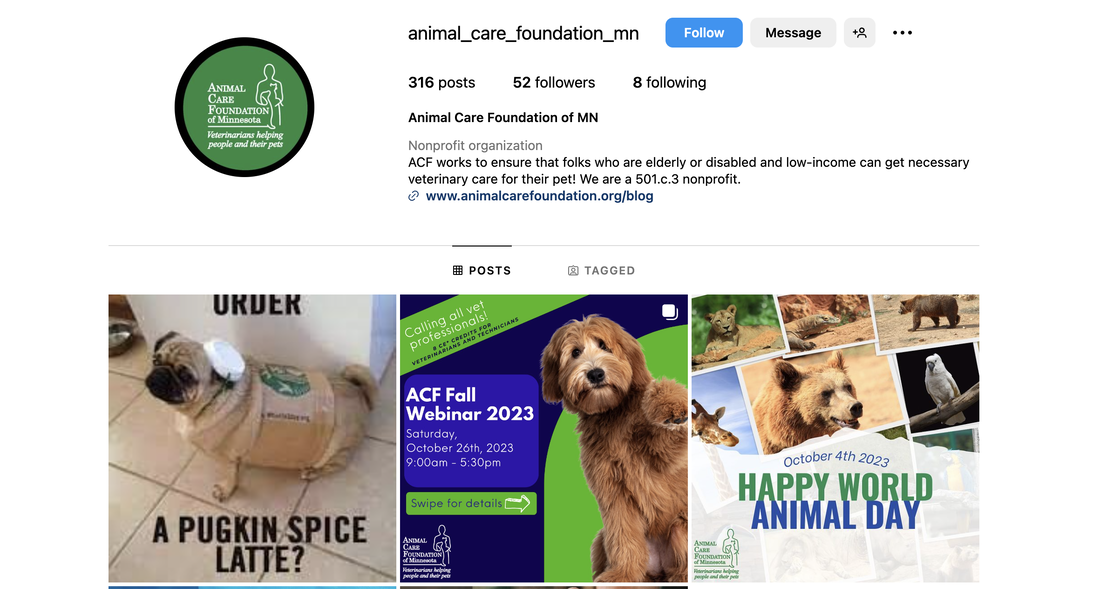

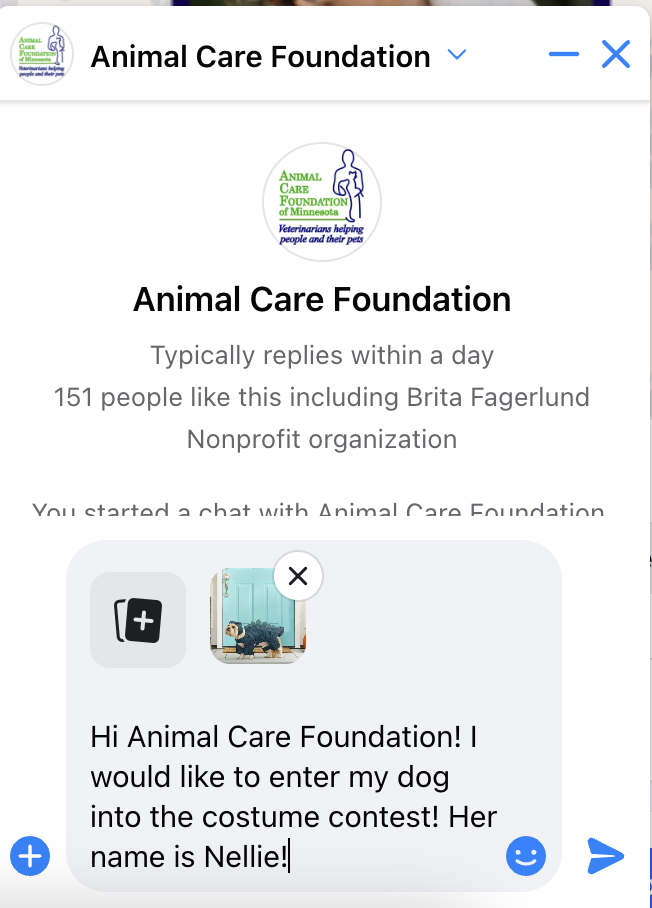 |
How to share Costume Contest with Others
3. Press the share button(paper airplane icon)
4. Share with friends through the direct message on Insta, FB, text or email to people, similar to how you direct message ACF.
5. Feel free to repost our posts on your Facebook or Instagram story!
Click these links to Instagram or Facebook below to get started in sharing a photo!
We know, you LOVE cats! But allergies can prevent us from being able to adopt a kitty of our own. Whether it is you that is allergic or maybe it's your roommate or a family member, a hypoallergenic cat might be the answer! You can get your kitty cuddles without the itchy eyes!
Cat allergies tend to be in reaction to dander and saliva. While no cats will be fully hypoallergenic, the cats below create the least amount of proteins that trigger allergies. These breeds are the most likely not to trigger allergies if you have mild allergic reactions to cats. If anyone has severe allergies, you should not bring a kitty into the home, even one of the breeds listed below.

|
You should also check with the organization you are adopting from to make sure there is an option to bring the kitty back if you do develop a more intense reaction after living with them for a few weeks or months. If the cat can’t stay with you, it is still your responsibility to make sure they end up somewhere safe. A reputable rescue or breeder will take their animals back if you or a family member becomes allergic and make sure the kitty gets a good new home.
Here are 10 Hypoallergenic Cat Breeds
1. Sphynx

|
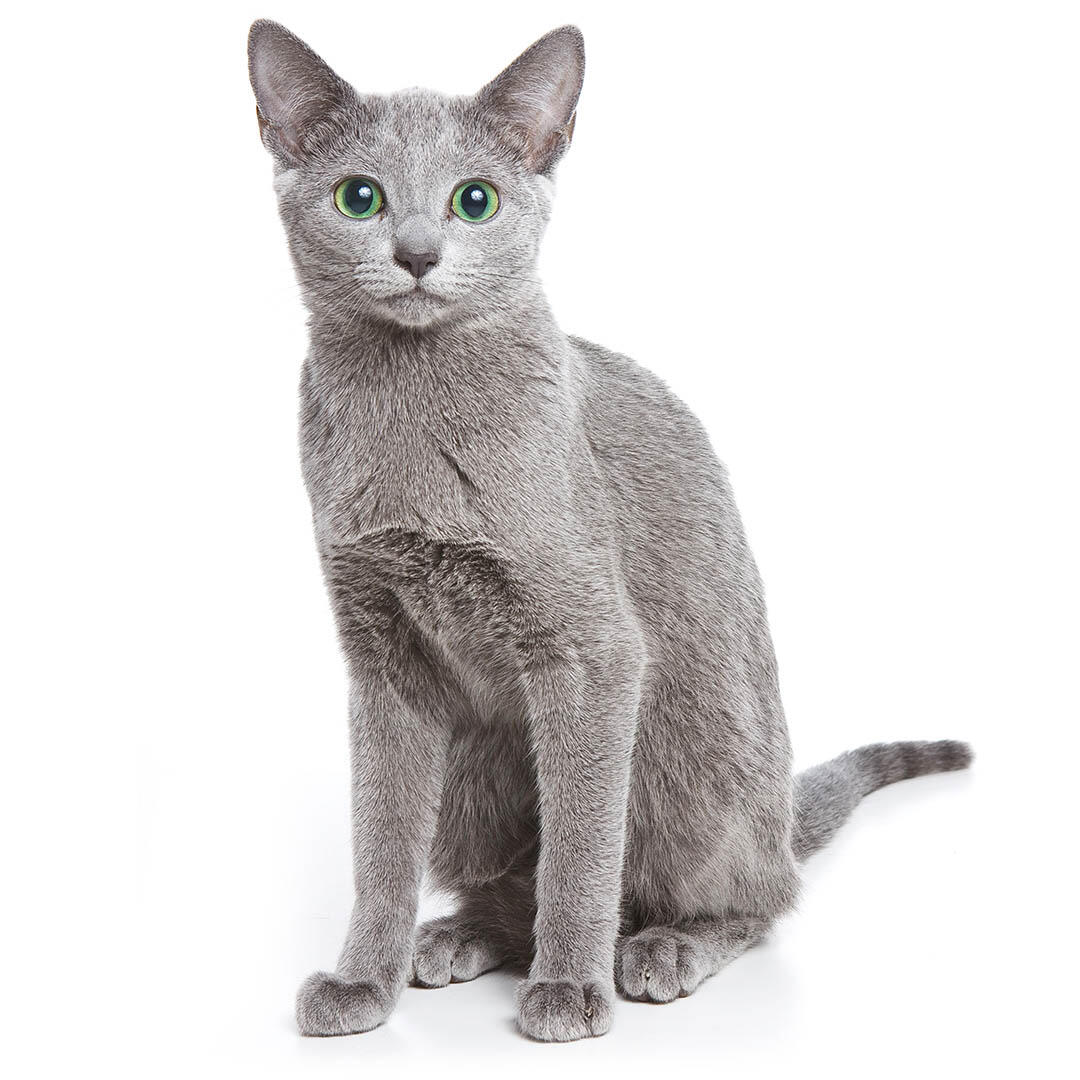
2. Russian Blue
|
3. Balinese

4. Siamese

5. Devon Rex

|
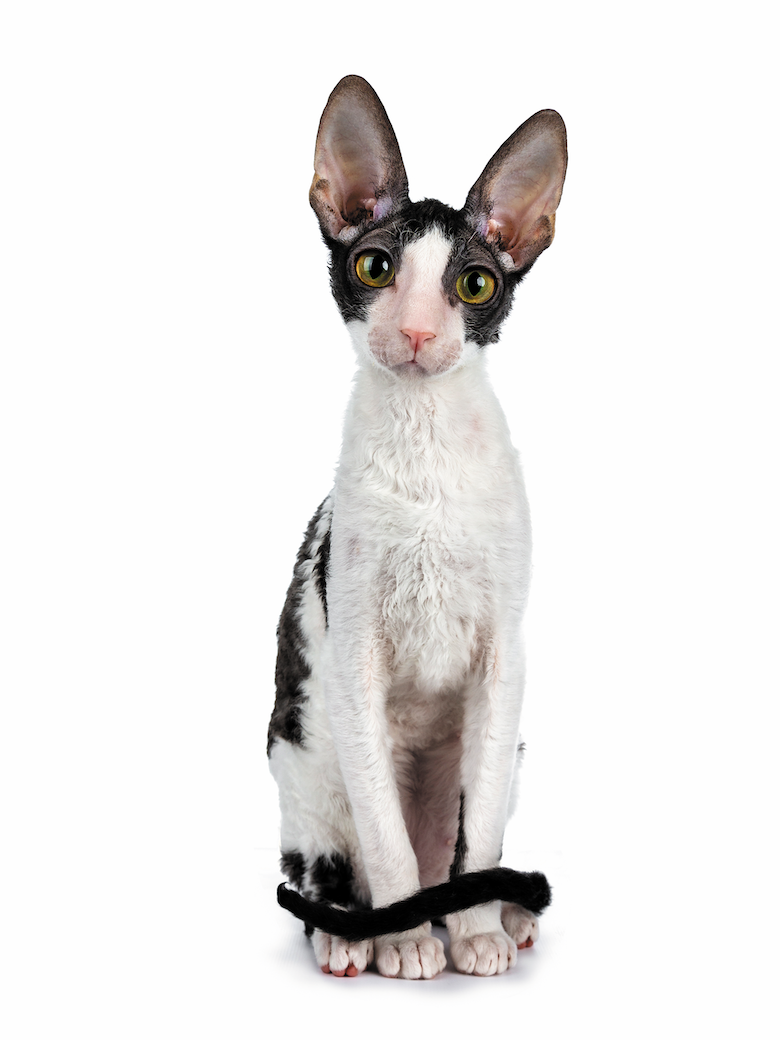
6. Cornish Rex
|
7. Bengal

8. Javanese

9. Oriental Shorthair

|
10. Siberian

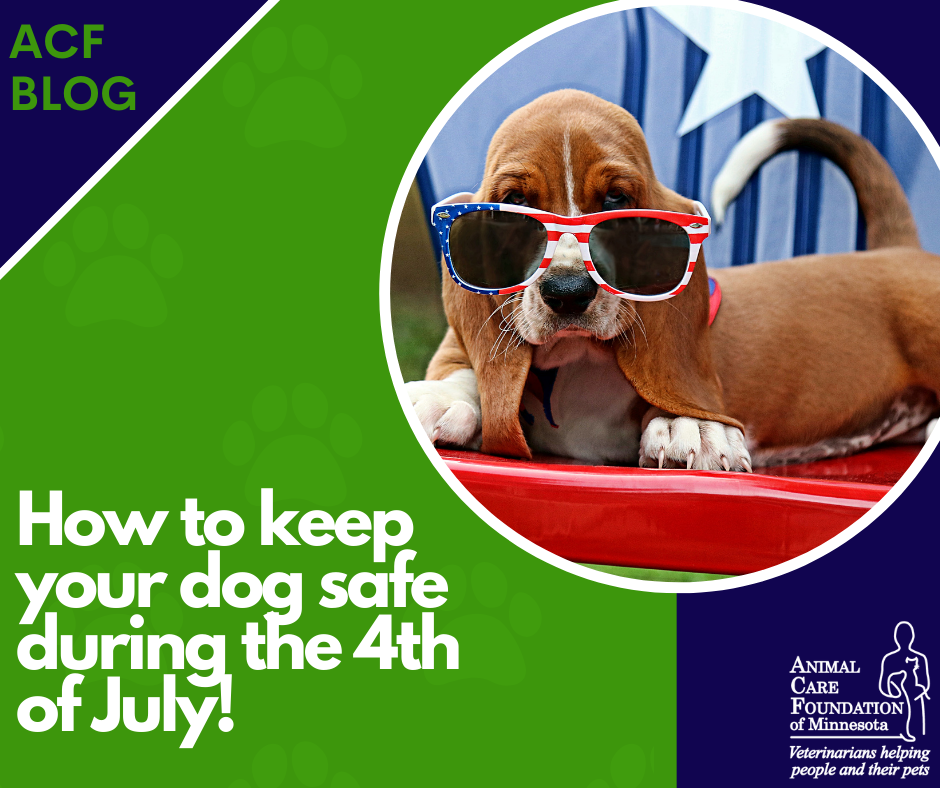
Whether or not your pet has pre existing anxiety or not, there are a few things that you can do to help them have a better night.
 |
Your pets will thank you for helping them have a stress free 4th of July!
For more information check out these articles:
https://www.npr.org/2021/07/03/1012255593/4th-of-july-fireworks-dogs-cats-pets-safety https://www.akc.org/expert-advice/training/how-to-keep-your-dog-calm-during-fireworks/’
Written by: Helen North
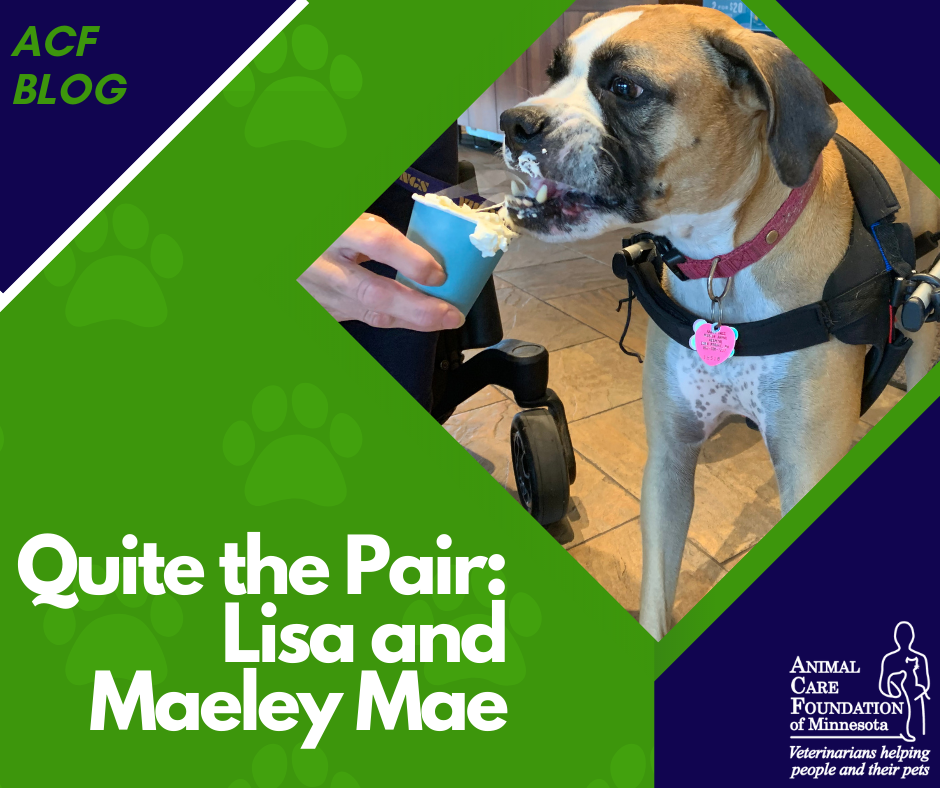
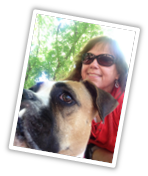
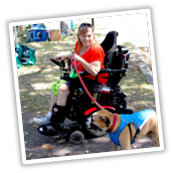
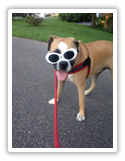
I was looking at getting another dog, following all the rescues, watching all the websites. I went to the Winter Carnival at the Doggie Depot. There, I spoke to a lady about fostering. It was a good idea. I could help out, get the love, all while I waited for the right match to come into my life.
I filled out the paperwork and was vetted. After I went to a couple of meet and greets, I was in.
 |  |
 |  |
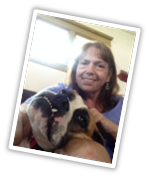 |
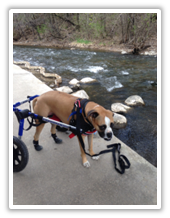
Through all of this, there were several places that helped with her care. The MN Boxer Rescue covered some of her initial medical costs, I did a Go-Fund-Me to help cover the cost for the heart worm treatment. The Animal Care Foundation helped with basic shots and later with the cost of her prescription food she needs for the bladder stones. We found a great nonprofit clinic, Mission Animal Hospital, that has a sliding fee scale program for her other needs. I also utilize Care Credit, since I could not get insurance for her because of her pre existing condition. I treat it as a monthly expense for her.
Lisa and Maeley Mae
Animal Care Foundation
Providing elderly and disabled community members access to veterinary care for their beloved pet.
Archives
April 2024
March 2024
February 2024
November 2023
October 2023
August 2023
July 2023
June 2023
May 2023
April 2023
March 2023
February 2023
January 2023
December 2022
November 2022
October 2022
September 2022
August 2022
July 2022
June 2022
May 2022
April 2022
March 2022
January 2022
December 2021
November 2021
October 2021
June 2020
March 2020
December 2019
November 2019
October 2019
Categories
All
About ACF
Animal Behavior
Black History
Cats
Client Spotlight
Contests
Dogs
Fall
Halloween
Influential Veterinarians
Pet Care
Pet Safety
Spring
Summer
Veterinary Professional CE
Ways To Support
Winter
Women's History
 RSS Feed